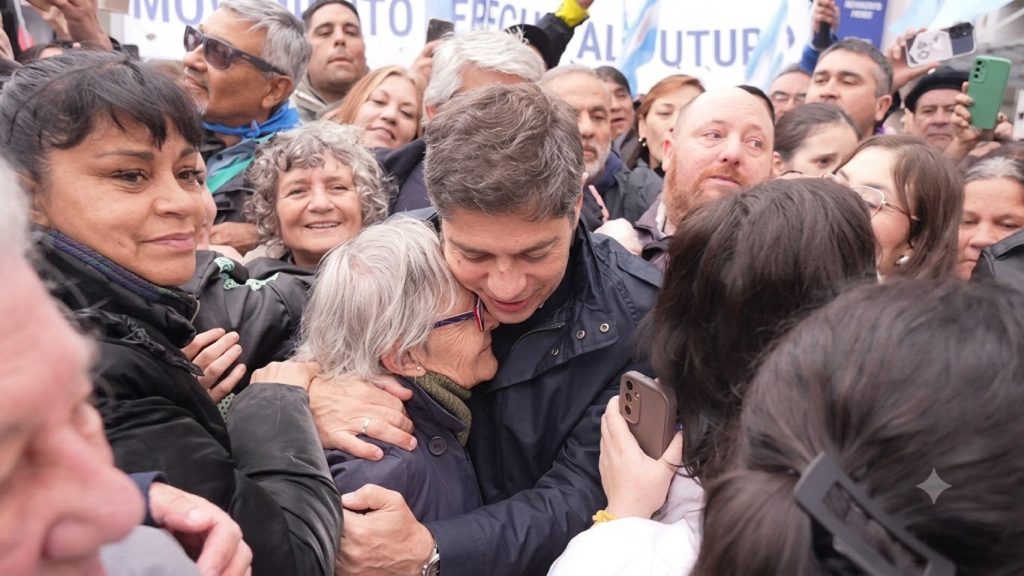
Axel Kicillof joined San Cayetano's pilgrimage organized by unions and social movements, a day after the Senate approved Ley de Inviolabilidad de la Propiedad Privada without the proposed changes to the Land Law or to Ley de Manejo del Fuego. From the sanctuary, the governor of Buenos Aires turned the legislative outcome and the incidents in front of Congress into the center of his message against the administration of Javier Milei.
The exclusion of those chapters represented a concession by the ruling party in light of the lack of sufficient support. Kicillof interpreted the outcome as a victory for those who mobilized to defend sovereignty and stated that the Government will not be able to proceed with a sale of the country. That statement expresses his political position; the confirmed parliamentary fact is that the Senate sanctioned the rest of the initiative and left out the most controversial reforms on rural lands and areas affected by fires.
The governor also accused the Executive Branch of not listening and of repressing those who were protesting peacefully. The previous day's protest had ended with tear gas, rubber bullets, and water cannon trucks in the vicinity of the Congress. The Comisión Provincial por la Memoria estimated about 1,500 people injured and confirmed at least nine arrests, while the Buenos Aires government estimated material damages of 468 million pesos during the day.
Kicillof's participation in San Cayetano expanded the focus from the legislative discussion to the social situation. The governor said he was supporting a population that is suffering and stated that millions of families had to go into debt to cover food or rent. He did not present an alternative economic program or new provincial measures there; he used the pilgrimage to connect the conflict over land ownership with the deterioration of income and the cost of basic necessities.
After greeting the faithful, Kicillof joined the column led by the CTA and the UTEP heading towards Plaza de Mayo. The mobilization was scheduled to merge at noon with the CGT and conclude with an event whose demands included decent wages. The sequence thus linked two consecutive days: the pressure in front of the Senate, which managed to remove chapters from the bill, and a traditional gathering that this year incorporated labor demands and criticisms of national policy.
The next immediate step was the march toward Plaza de Mayo and the joint action of the union federations. For the Government, the private property law advanced despite the concessions; for Kicillof, what happened showed a political and social limit to the officialist agenda. The dispute will continue both in the handling of the regulations that remained pending and in the ability of unions, movements, and opposition governors to sustain a common agenda after the vote.