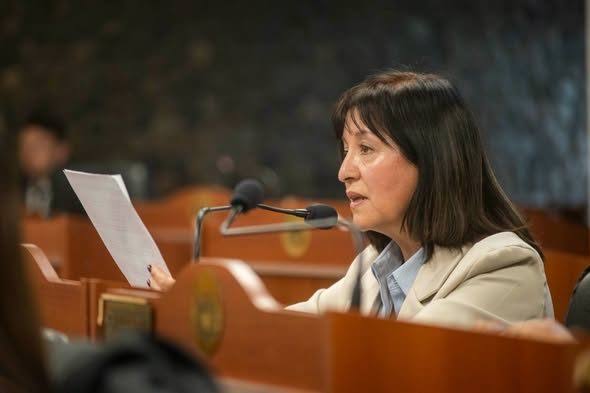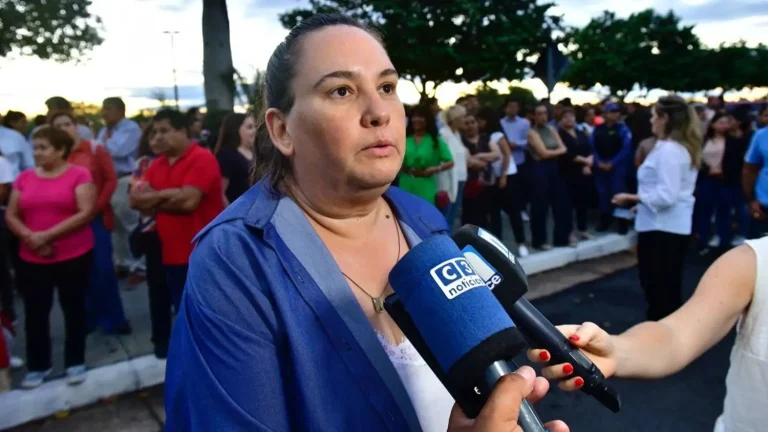
The Buenos Aires legislator Victoria Freire rejected that the legalization of voluntary termination of pregnancy is the main cause of the decline in birth rates in Argentina. Her response was directed at President Javier Milei and the Deputy Head of Government of the City, Clara Muzzio, who had linked both phenomena in recent public statements.
Freire pointed out that births have been steadily declining since 2014, while the law on voluntary termination of pregnancy was approved in 2020. According to his calculation, around 90% of the reduction recorded up to the present had already occurred before legalization. The temporal difference questions a single explanation, although by itself it also does not determine all demographic causes.
The deputy added that countries where abortion remains prohibited also experience declines in birth rates. Her argument seeks to place the phenomenon within an international trend associated with changes in life plans, employment, housing, and care organization. The comparison requires considering social and institutional differences between countries and is not equivalent to isolated evidence.
Another notable fact was the decrease in teenage pregnancies. Freire stated that since 2005 they fell by 64% among those under 19 years old and attributed part of that result to the National Plan for the Prevention of Unintended Pregnancy in Adolescence, which combined education and access to contraceptives. He presented this development as progress in autonomy, not as a problem that should be reversed.
The legislator also cited a national survey by UNFPA conducted between January and February of 2026 with 1.515 people aged 18 to 70 years. The study found that 57% of those aged 18 to 45 did not reach the desired number of children and that economic and childcare barriers explain 62% of those cases. The sample was weighted with parameters from the 2022. Census.
Freire also noted that in August the cost of raising a child or adolescent in the city ranged from ARS 998,061.25 to ARS 1,610,211.71, depending on age and sex. Her remarks do not settle the birth-rate debate, which has multiple causes, but shift attention from one law to material conditions and reproductive autonomy. She announced neither a new bill nor a comprehensive policy to reverse the trend.