
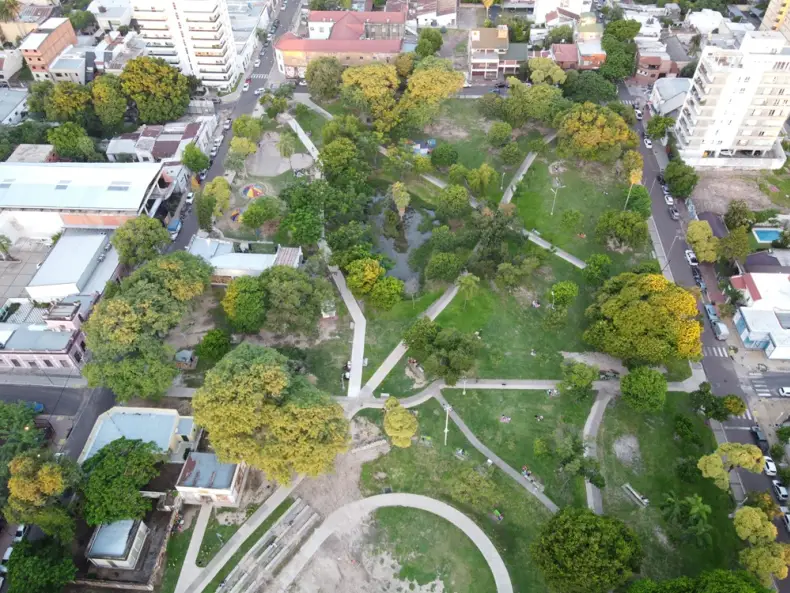
The city of Corrientes will begin an experiment to convert carbon captured by its urban trees into digital assets. The municipality signed an agreement with Biotoken and aims to become the first Argentine city to apply the mechanism. The initiative seeks to assign economic value to an environmental service and obtain resources that can return to caring for and expanding the capital's tree system.
The system must measure how much carbon the trees absorb and verify the result before converting it into tokens. Once certified, the assets may enter the voluntary market and be purchased by companies or individuals seeking to offset their emissions. The transaction does not begin with a general estimate for the whole city: it requires identifying the capture, validating it and turning it into a unit that can be offered.
Mayor Claudio Polich presented the agreement as recognition of the urban forestry work Corrientes has pursued for years. He also emphasized the initiative's pioneering character within Argentina. The generation of assets does not replace that previous policy but seeks to build a source of revenue from carbon retained by trees that already perform an environmental function in public spaces.
The use of those funds is part of the design. Public Services Secretary Ignacio Maldonado Yonna explained that the revenue will be reinvested in the urban tree plan and municipal nursery. Sales of assets to companies or individuals interested in offsetting emissions would therefore be connected to maintaining existing trees and to the city's capacity to produce new plants.
The city is continuing forestry actions this year through the La Muni en tu Barrio and Un árbol, un vecino programs. Those efforts are joined by plantings carried out with institutions and others completed at residents' request. The new economic instrument will therefore rest on a policy that already distributes trees through several channels and now seeks to add carbon measurement and certification.
Implementation will begin with a pilot in three city squares. The procedure for quantifying and certifying capture will be tested there before it is extended to a larger area. If that stage validates the system, the municipality and Biotoken plan to expand it to other green spaces and the North and South riverfronts. The next concrete step is not yet a broad token sale, but proving at those three locations that measurement can support verifiable assets and generate revenue for the tree system itself.


