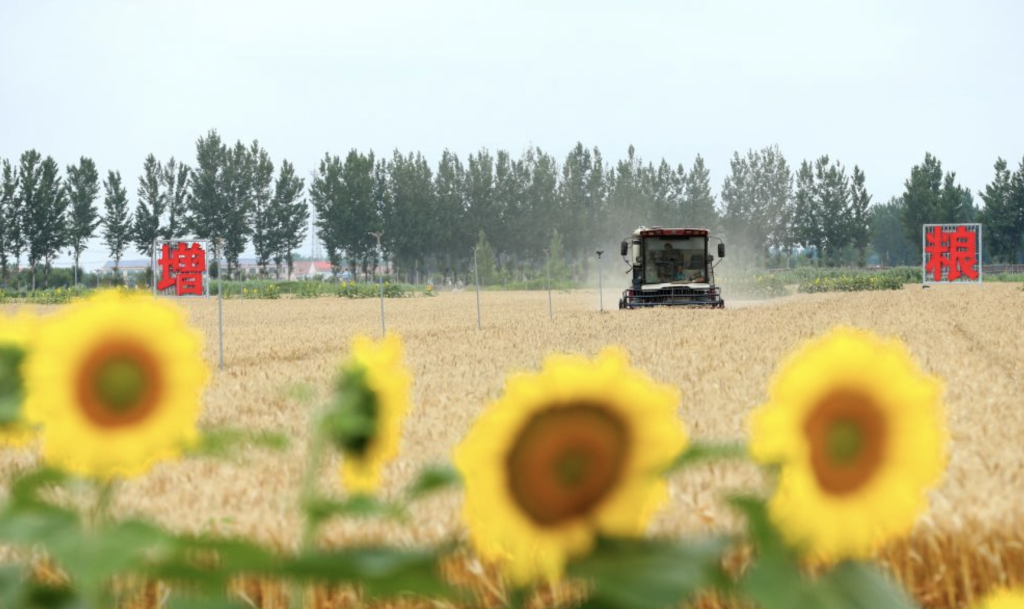
China closed its summer grain season with an unprecedented result: for the first time, total output exceeded 150 million tonnes. The mark places this year's harvest on a new threshold for the country's food supply.
Figures released on Friday by the National Bureau of Statistics put 2026 output at 150.75 million tonnes. The volume represents a 0.7 percent increase from the previous year, equal to an additional one million tonnes.
The gain came with an almost stable planted area. Land used for summer grains totaled 26.53 million hectares, just 0.2 percent below the level recorded in 2025.
Within that total, wheat kept its central role. The area planted with the crop exceeded 23 million hectares, although it showed a 0.3 percent year-on-year decline.
The key to the increase was yield. Output per hectare reached 5,681.6 kilograms, a 0.8 percent improvement from the previous cycle.
The result combines stable acreage, higher productivity and a harvest that again draws attention to China's capacity to sustain large volumes of basic production in an international context marked by tensions over food, climate and supply security.