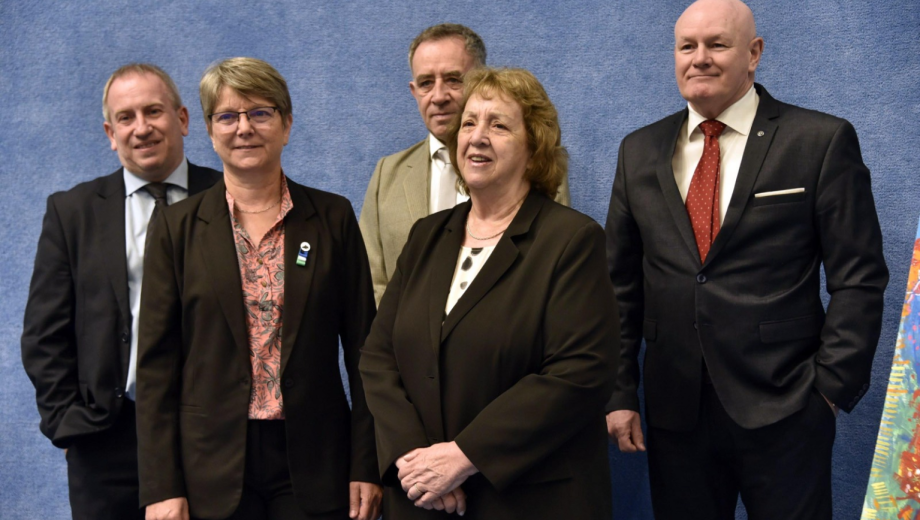
The five Cambia Río Negro lawmakers have taken their demand for full recognition as a legislative bloc to Argentina's Supreme Court. They filed a federal extraordinary appeal after the provincial Superior Court rejected an enforcement action and ruled that the controversy should be resolved within the legislature itself.
The group consists of María Patricia Mc Kidd, Santiago Ibarrolaza, Gabriela Picotti, Claudio Doctorovich and Daniel Sanguinetti, aligned with Aníbal Tortoriello. They argue that occupying a seat and voting is not full representation. They seek participation in parliamentary leadership, proportional committee membership, debate rights, advisers and administrative resources.
The conflict follows a contradictory institutional sequence. On December 30, 2025, Pedro Pesatti signed Resolution 460/2025 formally authorizing the bloc. On June 10, 2026, the Parliamentary Affairs Committee applied a suspension criterion, later ratified by the chamber presidency. The bloc therefore exists on paper but lacks full operational effects.
The provincial court refused intervention because internal remedies, including Article 148 of the rules, had not been exhausted. The appellants say that route is ineffective because it requires relief from the same institution restricting them. The Supreme Court must first decide whether there is a federal question and a concrete constitutional injury.
The appeal invokes equality, popular sovereignty, political rights and republican principles. Cambia Río Negro was the second-most-voted force in April 2023, with more than 86,000 votes. The claim is that the restriction harms not only five legislators but also voters and minority oversight.
Bloc recognition is not symbolic. It affects committees, speaking time, information, staff, resources and agenda negotiations. If a bloc's bills do not reach the floor and its members are excluded from parliamentary leadership, its capacity to convert votes into political initiative is sharply reduced.
The case also requires respect for separation of powers. Legislatures need autonomy, but autonomy cannot become immunity from constitutional rights. Judicial review should correct arbitrary exclusion without replacing the chamber in every internal decision. The key is whether the restriction is general and objective or targeted.
Time adds urgency because the mandates end December 9, 2027. A late judgment could be useless if the bloc spends most of its term without full powers. The ruling may set a precedent on legislative autonomy, minority rights and judicial review of parliamentary organization.