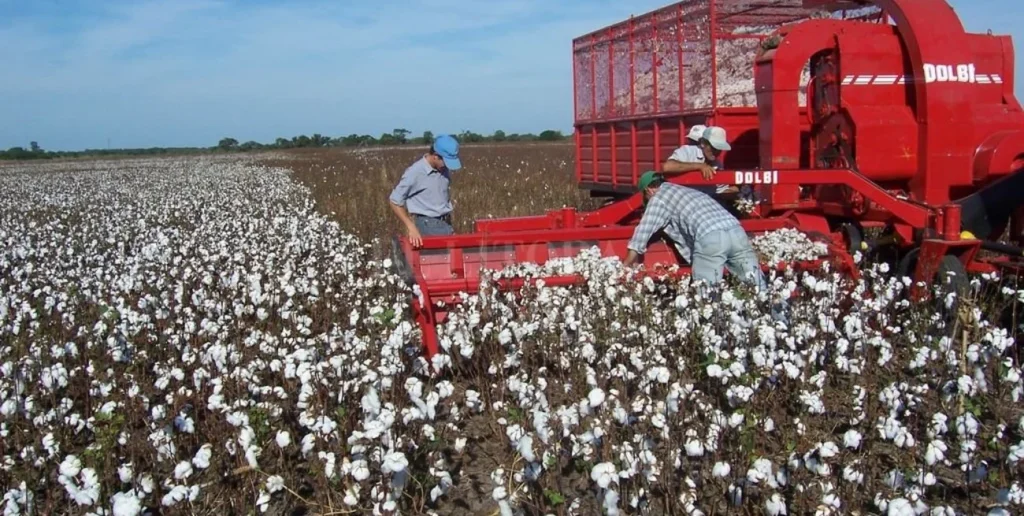
The cotton harvest approached its end in Santiago del Estero, with around 10% of the area still pending. In irrigated areas, few plots remained, although Colonia El Simbolar accumulated delays due to rain and lack of ground. In dryland areas, occasional tasks still persisted before closing the cycle.
Reported yields ranged between 2.000 and 2.500 kilos of raw cotton per hectare. Fiber quality showed an improvement, and the ginning percentage averaged 38%. These values describe the technical balance noted for the campaign, but they may vary between establishments depending on the environment, planting date, and management.
Agronomist engineer Jaime Coronel indicated that the behavior of the cotton boll weevil raised questions. In a previous campaign, traps captured between 130 and 140 insects per day without equivalent damage being observed on the crop. At the same time, attacks by Spodoptera, a pest that requires monitoring and specific management decisions, increased.
Water availability became a constraint again. Irrigation systems depend on reserves, and rainfed areas need summer rains in environments close to the isohyet of 500 millimeters. The combination forces adjusting dates and expectations. Cotton sown late has fewer chances of properly completing its cycle, escaping adversities, and expressing yield.
Rotation appears as a tool to distribute risks and take care of the system. With irrigation, fertilization, the correct timing, and the appropriate variety, wheat can reach between 3.000 and 4.000 kilos per hectare. Soybean occupied more area due to delays in cotton planting, while sesame, black bean, and mung were considered alternatives to diversify.
The close of the harvest leaves moderate yields, better fiber quality, and open issues in pests and water. The pending 10% should be collected when the soil allows machinery entry without aggravating compaction or causing losses. Experience also reinforces the importance of planning rotations and avoiding late sowings, because crop performance depends as much on genetics as on the timing of each task.