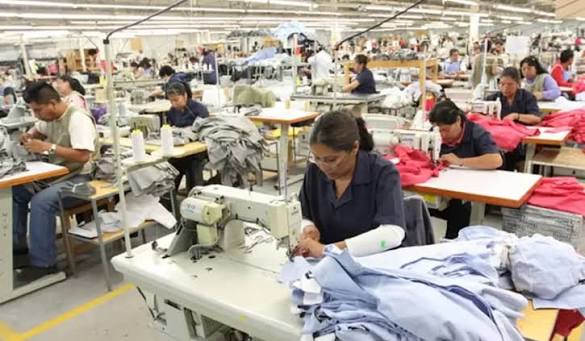
Indumentaria Catamarca will permanently stop producing in the coming days, after seven years of activity in the province. The closure will affect the 20 workers who still make up the plant and who will lose their jobs when operations end. The decision turns a contraction process, which had already drastically reduced the factory's workforce, into a permanent shutdown.
Julio Serrano, manager of the firm, confirmed the end of activities and linked it to the situation the textile sector is experiencing. His explanation did not present the measure as a pause, a temporary restructuring, or a suspension of lines: he indicated that the company will permanently cease its production. The new fact, therefore, is the complete closure of the industrial unit and not just a new staff adjustment.
According to Serrano, the decision responds to three connected factors. The drop in sales reduced the demand that the company received; that setback led to a decrease in production and weakened the capacity to sustain the existing structure. To that sequence, he added the impact of the opening of imports, which, according to his assessment, cut the competitiveness of local textile companies against products coming from abroad.
The evolution of employment shows the scale of the decline. Indumentaria Catamarca began its operations with 40 workers and, during the period of greatest growth, reached 150. From that peak, the workforce gradually decreased to the current 20 employees. That is, at the time of closure, less than one-seventh of the staff that the factory had reached at its peak expansion remained.
The latest reduction no longer leaves a smaller structure in operation: it eliminates the remaining 20 positions and shuts down a seven-year industrial trajectory. The plant's course thus links the variables that the company itself identified as decisive: lower sales, reduced production volume, and imported competition that affected its market position. The reported immediate impact is concentrated on job loss and the disappearance of that productive capacity in Catamarca.
The source does not report an exact date for the last day of activity, beyond placing it in the coming days. It also does not mention a relocation plan for the staff, assistance measures, negotiations to sell the plant, or the possibility of reopening under another owner. With the confirmation of the definitive closure, the next verifiable step will be the completion of production and the dismissal of the 20 workers who still remain in the factory.